Renovated Properties in Portugal: Beautiful Photos, Hidden Legal Risks

Jéssica Dos Nunes | Corporate Lawyer
A beautifully renovated property can be love at first sight. Fresh interiors, elegant finishes, modern kitchens and natural light can make everything look picture-perfect. But in real estate, appearances can be deceiving. In Portugal, not every beautifully renovated property is a properly regularised one.
This does not mean that buyers should distrust every refurbished property. It simply means that attractive renovations should always be matched by careful legal and technical due diligence.
Many renovation works carried out over the years involve structural changes, extensions, attic conversions, enclosed balconies, changes to the internal layout or alterations to the original use of certain areas.
While these improvements may increase the property’s appeal and market value, they do not automatically mean that the works comply with Portuguese planning, construction, condominium or property registration rules.
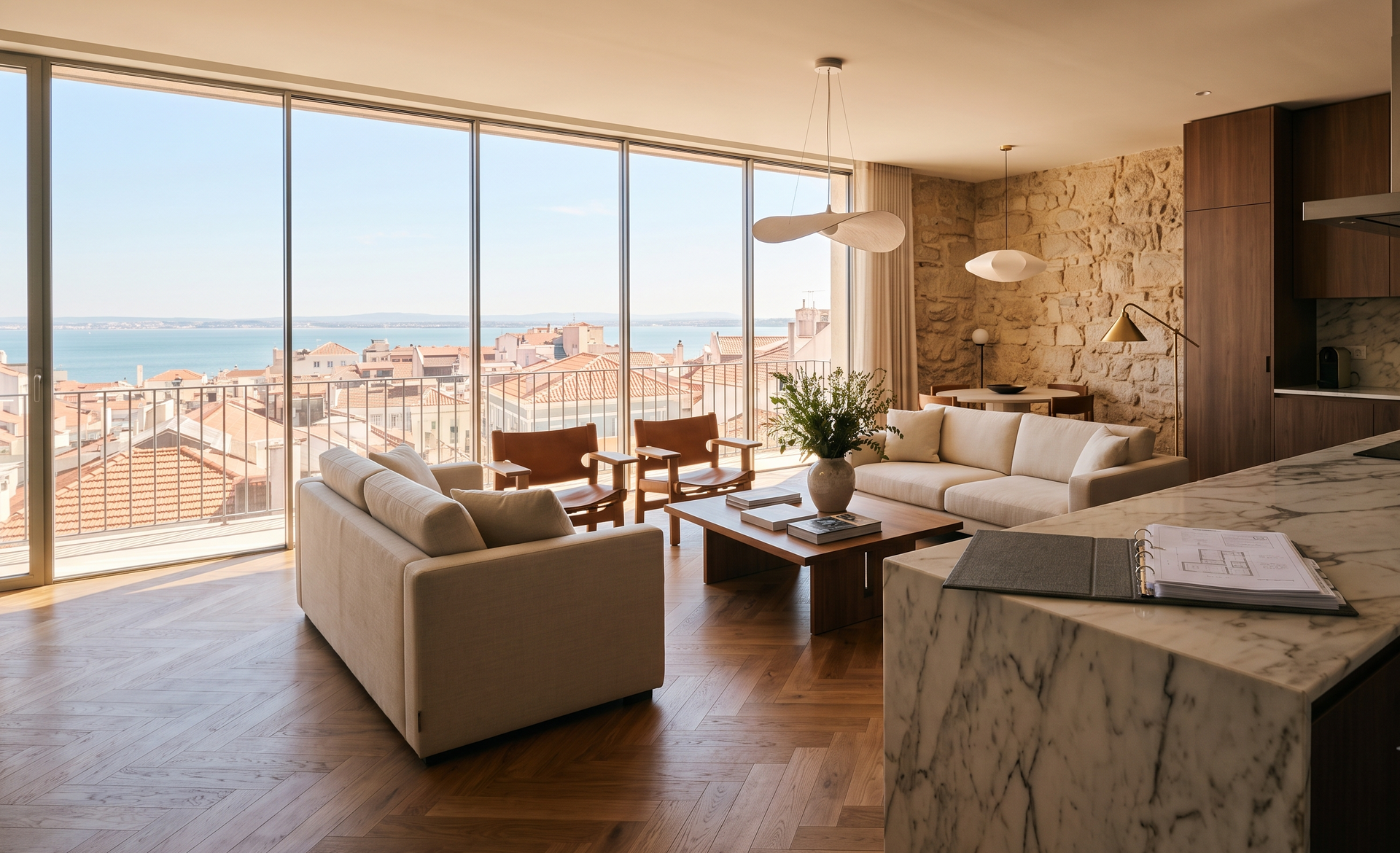
A property may look flawless during a viewing while still hiding legal issues behind freshly painted walls.
The legal risks are often invisible. Has the renovation been properly licensed, subject to prior communication, exempt from or not subject to prior urban control? Does the current layout match the approved plans and the property documentation? Were any changes made to common parts of the building? Was the condominium’s approval required? Does the description in the land registry, tax records and other property documents correspond to the property as it is actually being sold?
These are questions that photographs cannot answer.
One of the most common misconceptions is that, if a property has been sold before, everything must already be in order. Unfortunately, that assumption is not always correct. Legal irregularities can remain unnoticed for years and only become apparent during a future sale, bank valuation, inheritance process, renovation project or due diligence review.
Buying real estate should never be based solely on aesthetics. A renovated property may have new flooring, a designer kitchen and carefully styled interiors, but the legal foundations may still require close examination.
This is precisely where legal advice makes the difference.
A real estate lawyer does not replace the architect, engineer or surveyor. Instead, the lawyer reviews whether the legal documentation tells the same story as the property itself. This may include analysing title documents, land registry records, tax documentation, planning and use documentation, horizontal property title documents where applicable, condominium matters and any legal issues that may affect ownership, financing, future resale or further works.
In renovated apartments, buyers should also verify whether the works are consistent with the horizontal property title and condominium rules, particularly where balconies, façades, attics, storage areas, terraces, garages or common parts are involved.
Good legal advice is not about creating obstacles to a purchase. It is about providing certainty.
In many cases, potential issues can be clarified or addressed before completion of the transaction, allowing the buyer to proceed with greater confidence rather than discovering unexpected problems years later.
Portugal continues to be one of Europe’s most attractive destinations for property investment, offering excellent opportunities for both residents and international buyers. However, every investment deserves more than an emotional decision based on beautiful photographs.
A renovated property should provide peace of mind, not future disputes.
Because in real estate, the best investment is not only choosing the right property. It is making sure that the legal foundations are as solid as the new finishes.
Beautiful photos may sell the dream. Proper due diligence helps ensure that the buyer is purchasing the reality.
At
LVP Advogados, our Real Estate team regularly advises both Portuguese and
international clients on residential and
commercial property transactions, carrying out
comprehensive legal due diligence to identify potential risks before completion. Whether you are purchasing a renovated apartment, a family home or an
investment property, we help ensure that your
acquisition is legally sound, allowing you to invest with confidence and avoid unexpected issues in the future.